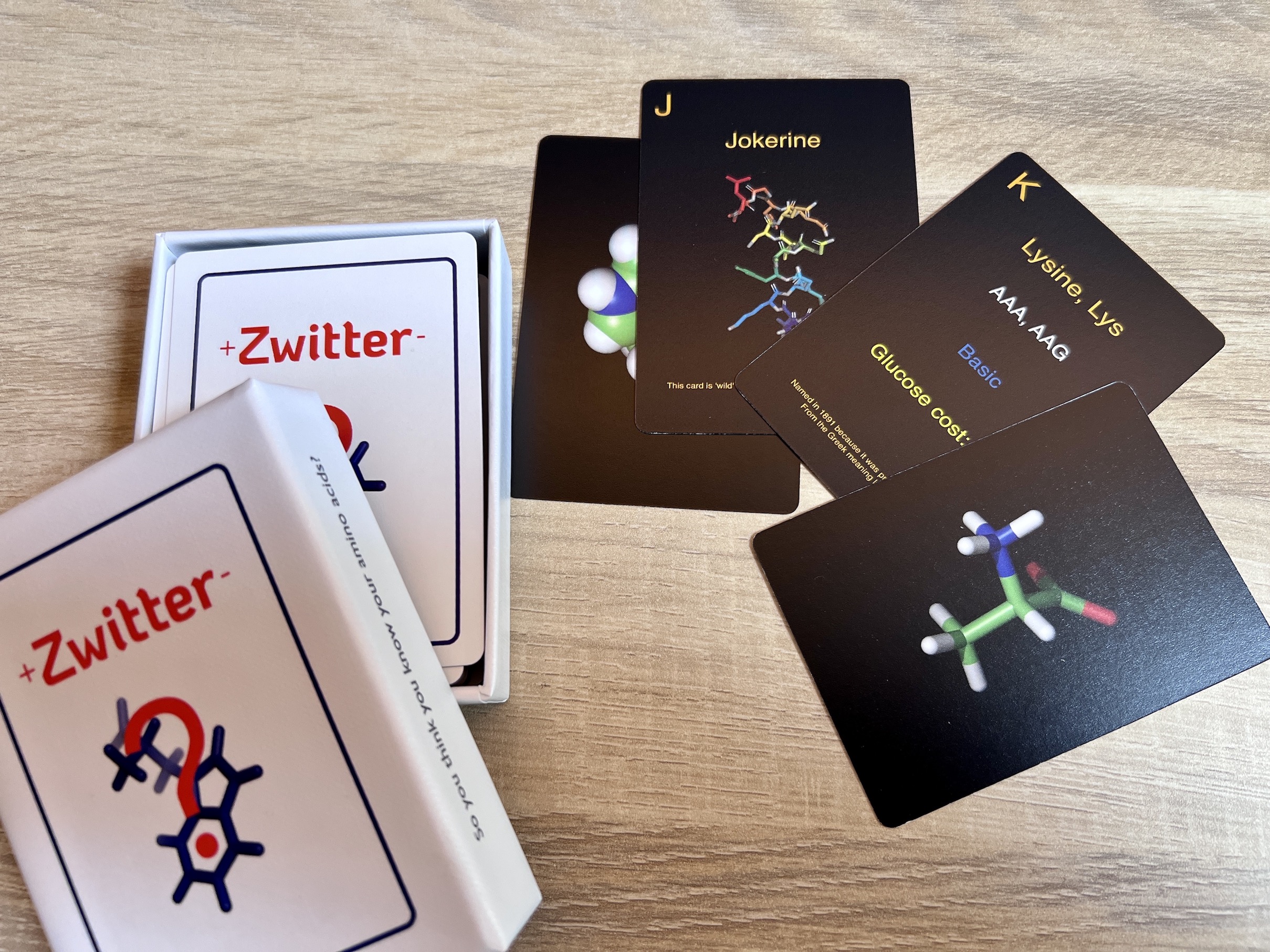
ZWITTER started as a bit of fun — an outreach project finished during a lockdown, built around a simple idea: what if the amino acids were the faces of a deck of playing cards?
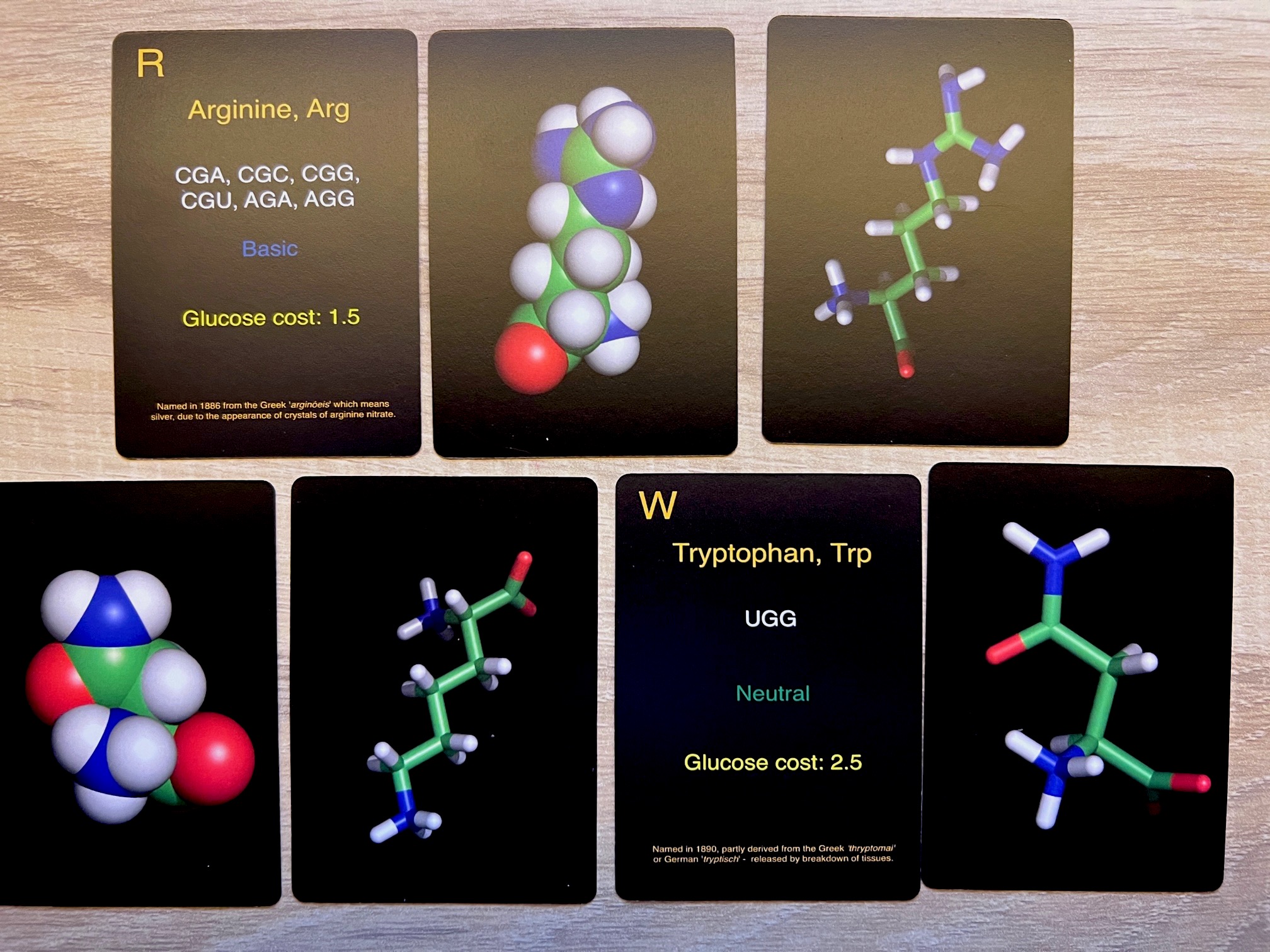
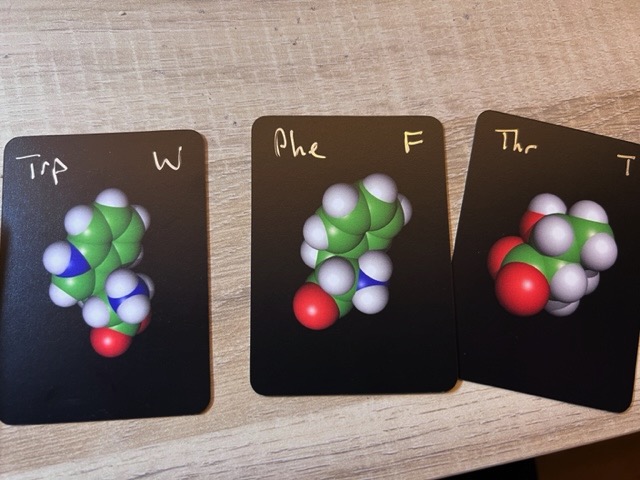
Four suits, twenty cards each. Two are structure suits: one drawn as space-filling, hard-shell models (the same style as old molecular modelling kits), the other as skeletal "liquorice" structures, where every atom and bond is visible. The other two are factoid suits — one card carrying the genetic codons, net charge, and rough biosynthetic "cost" of that amino acid, the other its monoisotopic residue mass and elemental composition, colour-coded by atom.
Too fiendish, first time around
The first version, built with input from colleagues at the Centre for Proteome Research, turned out to be too difficult — properly educational, but not exactly a game you'd want to play in a pub. The idea was that a card could carry real value (a "basic" amino acid trumping a "neutral" one, say, or paying a card's biosynthetic cost in "glucose chips"), but that only works if people can actually follow what the card is telling them.
There's even a joker: Jokerine.
The revised set pared things back considerably — closer to an actual card game than a chemistry seminar you carry in your pocket.
Whether it counts as more of a success as a teaching aid or as a party trick is still an open question.